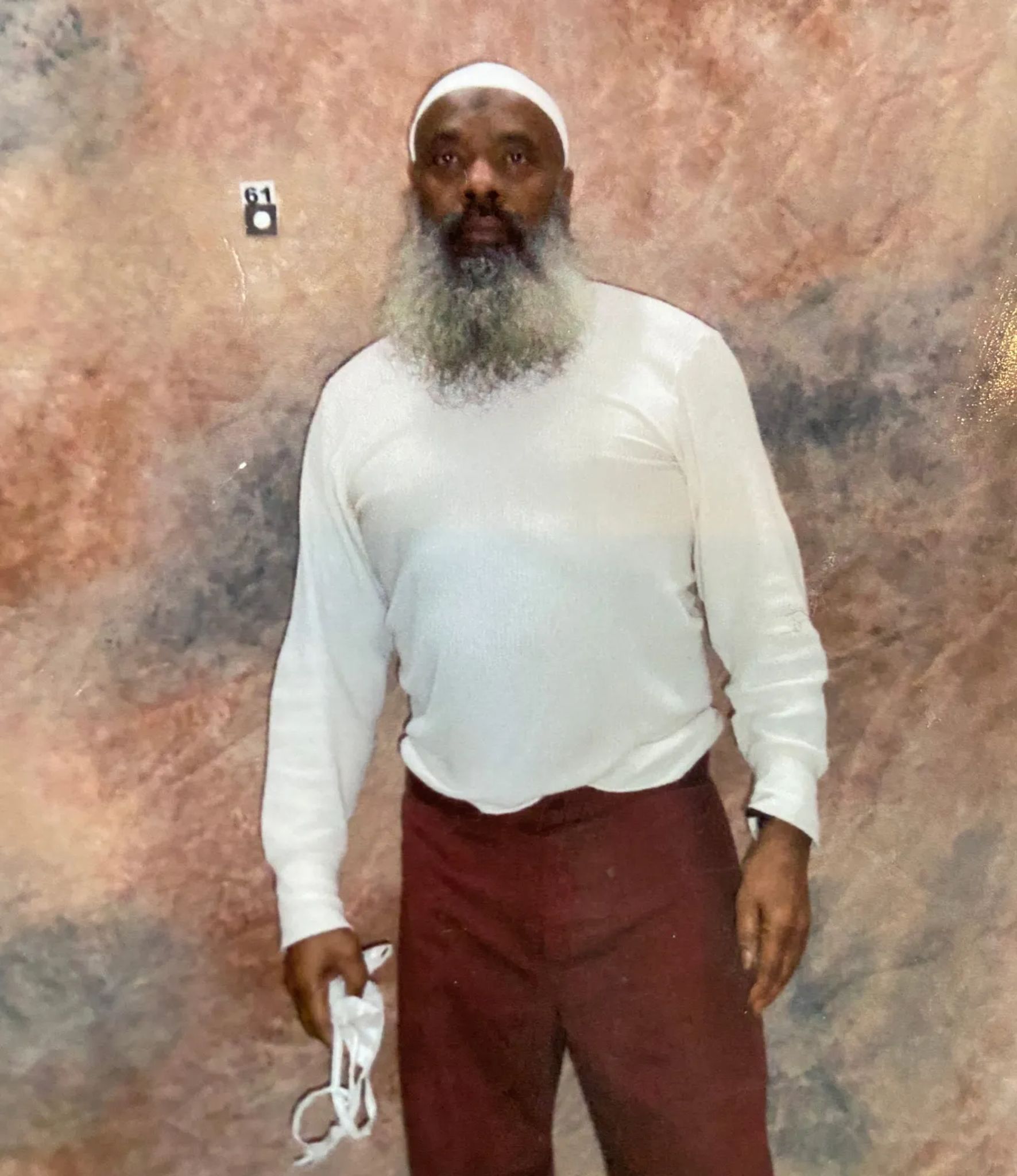

Angelo was dying of cancer in a Pennsylvania prison. He knew it. The people who visited him knew it. His doctors knew it.
Pennsylvania has a compassionate release program for exactly this reason — to allow people who are seriously ill or dying to leave prison and spend their final days somewhere other than a cell. Angelo applied. Advocates fought for him. Months of paperwork, medical documentation, and phone calls followed, all to prove what was already obvious to anyone who looked at him.
In February 2025, the approval came through.
Angelo had been incarcerated for years. In that time he had become, by the accounts of the men around him, a mentor. People came to him. He listened. He gave counsel. He was, in the way that institutions sometimes produce despite themselves, a steadying presence on his unit.
When the release was approved, the men around him celebrated. Angelo talked about what he was looking forward to. Sunlight. Breathing outside air without razor wire overhead. Hearing ordinary sounds again — the kind of sounds that people who have never been incarcerated don't notice, because they are simply the texture of a free day. He carried that vision even as his body failed. The possibility of leaving had given him something to hold onto.
What happened next is a story about the process of compassionate release in practice.
Fifteen long-term care facilities were contacted, one by one. Some cited policies restricting formerly incarcerated individuals. Others refused because of liability concerns, security fears, or a lack of beds for Medicaid patients. Each call followed the same pattern — a hopeful introduction, a careful pause, a polite refusal, or silence.
Days stretched into weeks. Angelo's condition worsened. The system had agreed to let him leave. There was just nowhere willing to let him arrive.
Before a placement could be secured, Angelo died on June 16, 2025, in prison.
The men who knew him worried he would be forgotten. He had no family. So someone wrote an obituary and posted it on Legacy.com. A Muslim mosque agreed to receive his body for burial. His few friends shared the cost of a grave.
These are the things that happened after Angelo died, arranged by the people who had known him inside and outside the walls.
Angelo's story is not unique. Across Pennsylvania, people who have been approved for compassionate release cannot access it and are dying in prisons and jails because there are not enough facilities willing to receive them, because Medicaid coverage is inadequate, and because the infrastructure that would make release real does not exist at the scale the need requires.
Compassionate release is supposed to be the answer to a simple question: does a person who is dying need to die in prison? Pennsylvania has decided, on paper, that the answer is no. Angelo's story is what the gap between that answer and reality looks like.
We believe in a Pennsylvania where compassionate release is not just a policy that exists, but one that works.
This story was shared by Greg, one of our prison monitoring volunteers, at the request of fellow younger incarcerated people who knew Angelo. They shared that they felt Angelo would be forgotten on the outside.
Through our ongoing Real Stories series, we share reflections from volunteers, families, and others in our community about the moments that stay with them and the ways compassion, presence, and human connection can make a difference.